From Notebook to System: Production Plant, Yosh Flow
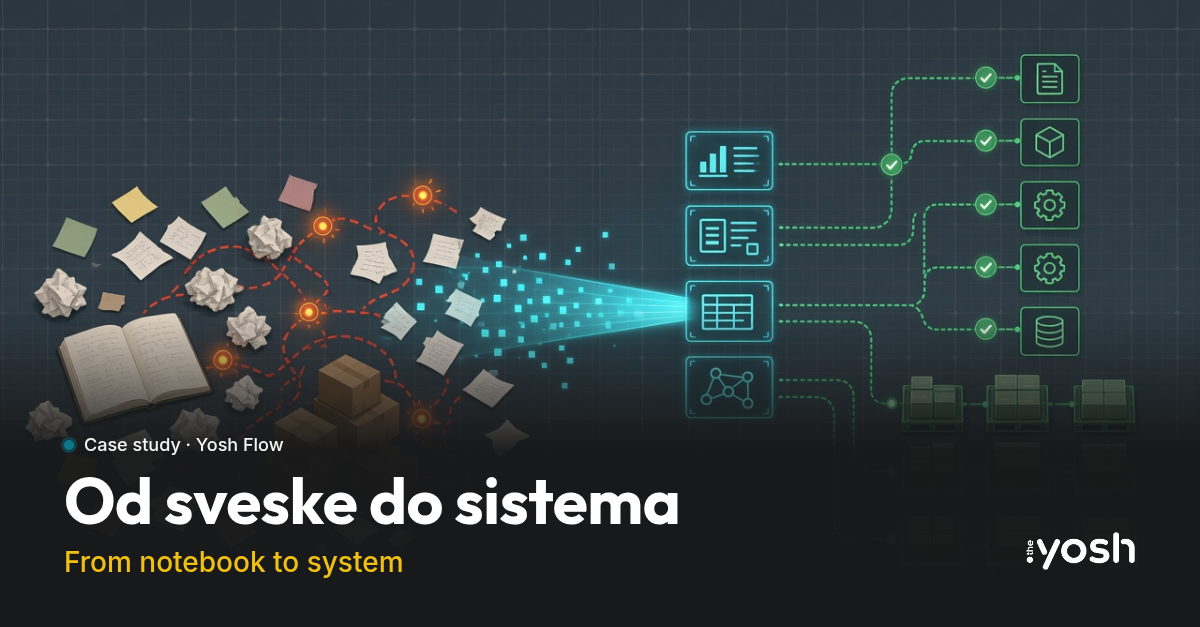
A production plant from the region ran its orders, work orders and stock from a paper notebook and from memory. In six months on Yosh Flow, 292 work orders and 20 production projects have gone through the system, and in October 3.9x more orders go through the system than in September.
From Notebook to System: How a Regional Production Plant Moved to Yosh Flow
Work orders through the system since May
Production projects run in the system
More orders through the system in October than in September
More units through the system in October than in September
1. The Starting Point: A Notebook and Memory
Before Yosh Flow, the plant had no ERP and not even organized spreadsheets. Orders, work orders and warehouse stock were kept in a paper notebook, and everything else was kept from memory, in the heads of the people who had been running the work for years.
That works as long as one or two people have everything under control. The trouble starts with simple questions: how much material do we have in stock, which work order is in progress, who requested material and for what? The answer depends on who is at work that day and whether anything was written down.
2. The Approach: Process First, Then Software
Yosh does not start by installing software. It starts with a conversation about how the work actually flows: where an order comes from, who opens a work order, how material is issued, where time is lost and where double entry happens.
Using Lean principles, that flow is first made visible, then standardized, and only then moved into the system. The goal is not to digitize the notebook, but to set up a process that is clear to everyone on the floor and where every step is traceable.
3. A Module-by-Module Rollout
Instead of a big ERP project that takes months, Yosh Flow was introduced step by step, starting with what the plant needed most:
Late April 2026: Go-live
The plant goes live on Yosh Flow.
From May: Work Orders & Projects
Work orders and production projects are run in the system.
September: Orders
Orders are moved into the system.
Modules in use today
4. Results: What Goes Through the System Today
Since May, 292 work orders and 20 production projects have gone through Yosh Flow. That is information that used to exist only in a notebook or in someone's head, and is now accessible, searchable and traceable.
Orders were moved into the system in September. In the second month of working with orders, October (up to 20 October), 3.9x more orders and 2.7x more units go through the system than in September. In other words, a growing share of the plant's daily work now happens through the system rather than around it.
5. Before and After
| Question | Before | With Yosh Flow |
|---|---|---|
| Where are the orders? | In a notebook and from memory | In the orders module |
| Which work order is in progress? | Depends on who you ask | Work orders and projects in the system |
| How much material do we have? | An estimate from memory | Warehouse with stock tracking |
| Who requested material? | Verbally | Requisition with a trail in the system |
| Who is on leave? | Verbal arrangement | Absence requests in the system |
6. What This Means for Other Manufacturers
This plant's experience shows that you don't need a “perfect” starting point or tidy spreadsheets to introduce a system. It is enough to start with the process that hurts most, set it up properly, and then add the next module. A plant that ran from a notebook now manages its warehouse, requisitions, work orders, projects, orders and sales of finished products in one system.
7. Short Glossary
A document defining what to produce, how much and by when.
A request to issue material from the warehouse for a specific job.
The ability to see who did what and when, for every step.
The Yosh approach: the process is set up and standardized first, then moved into the system.
Still running on a notebook or Excel?
Book a free 30-minute intro call. We'll walk through your current process and show you where it makes most sense to start.
Book a free intro call (30 min)